

Carbon steel tube is usually the easiest and cheapest to laser cut when oxygen-cut edges are acceptable, stainless steel usually costs more because clean cuts often need nitrogen or inert gas, and aluminum needs tighter process control because many alloys reflect heat and conduct heat quickly. The biggest deciding factor is not raw tube price. I tell buyers to compare total cut cost per part, including assist gas, cycle time, scrap, deburring, operator time, and the required edge condition.
| Decision dimension | Carbon steel tube | Stainless steel tube | Aluminum tube |
|---|---|---|---|
| Typical laser cutting cost | Usually lowest when oxygen reactive cutting is acceptable | Usually higher because clean edges often need nitrogen or inert gas | Can be competitive, but alloy, wall thickness, and burr control matter |
| Cutting process fit | Oxygen-assisted reactive cutting often works well | Nitrogen or inert-gas fusion cutting often protects clean, corrosion-resistant edges | Fiber laser cutting can work well, but reflectivity and heat conduction make setup more sensitive |
| Main edge risk | Oxide edge, dross, corrosion protection after cutting | Heat tint or edge oxidation if gas purity or shielding is poor | Back-reflection risk, burr/dross control, alloy and temper variation |
| Common standards buyers specify | ASTM A500/A500M, EN 10219, EN 10210, GB/T 6728, JIS G 3444, JIS G 3466 | ASTM A554, ASTM A269/A269M, EN 10296-2, EN 10297-2, GB/T 12770, GB/T 14975, JIS G 3446, JIS G 3459 | ASTM B221, EN 755-2, GB/T 6892, GB/T 4437.1, JIS H 4080 |
| Best-fit use case | Structural tube, painted parts, powder-coated frames, cost-sensitive fabrication | Visible parts, corrosion-resistant parts, sanitary ware, parts that need a clean edge | Lightweight parts, selected furniture, transport, and designs where weight matters |
Which tube material is usually cheapest to laser cut?
Carbon steel tube is usually the cheapest to laser cut when the drawing allows oxygen-assisted cutting and accepts an oxidized edge. Oxygen reactive cutting adds heat in ferrous materials, so the machine can often cut carbon steel with less laser power demand than inert-gas fusion cutting. But the oxide edge can add downstream work if the part needs welding, painting, powder coating, or corrosion protection.
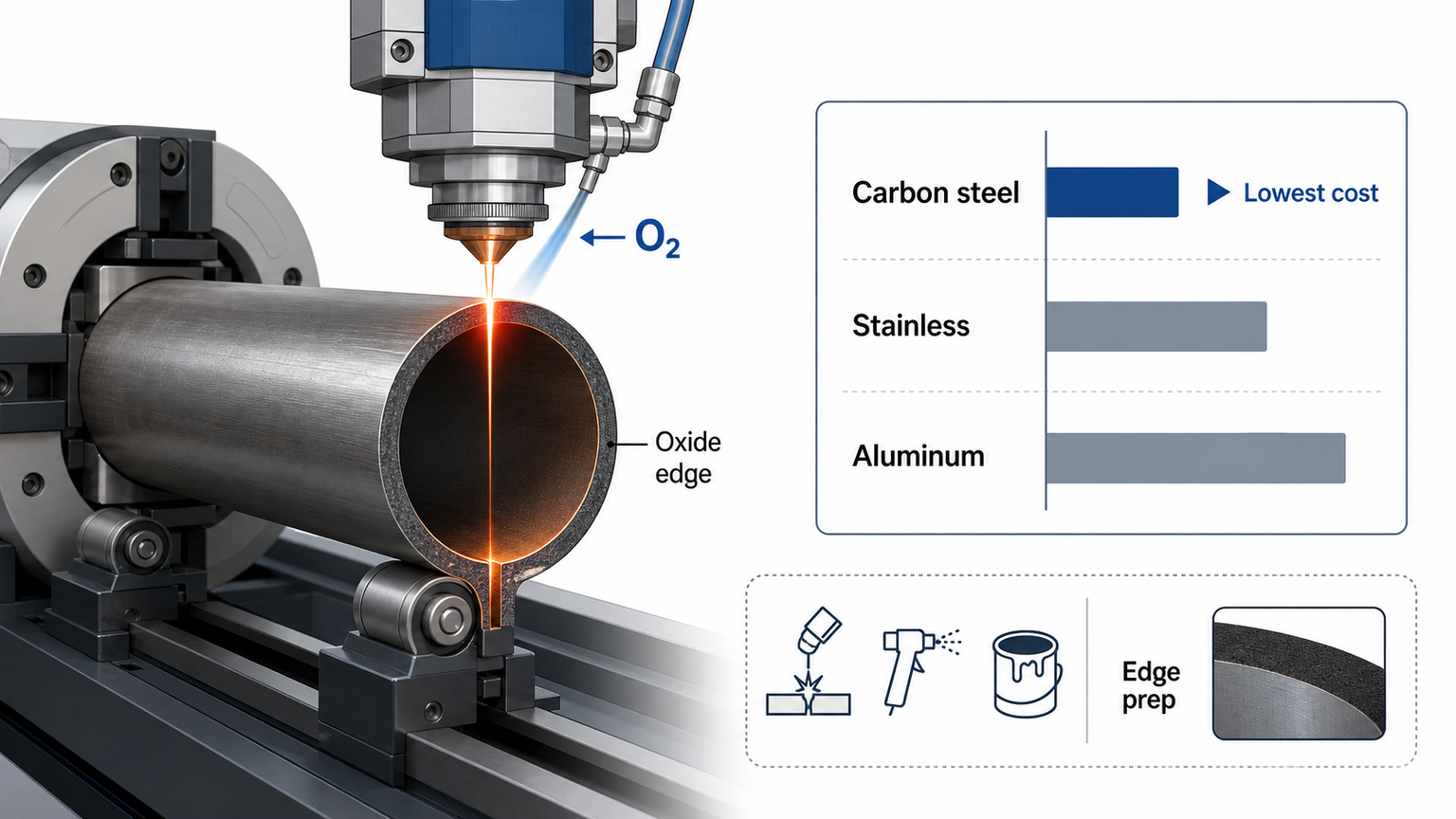
On the factory floor, I see this decision often. A buyer asks for the lowest cutting cost, but the drawing also requires a clean weld surface or visible finish. In that case, the cheapest cut may not create the cheapest finished part.
For carbon steel tube, many buyers specify ASTM A500/A500M for cold-formed welded and seamless structural tubing in round, square, rectangular, or special shapes. Buyers in Europe may reference EN 10219 for cold-formed welded structural hollow sections or EN 10210 for hot-finished structural hollow sections. In China, GB/T 6728 is common for structural hollow sections. In Japan, buyers often use JIS G 3444 for structural tubes or JIS G 3466 for square and rectangular structural tubes.
The cost advantage comes from the process. In oxygen reactive cutting, the oxygen reacts with the hot steel and adds its own heat to the kerf, so the laser does not have to carry the whole thermal load. That is why carbon steel often wins on cutting cost.
But I do not call carbon steel the cheapest in every project. Stainless steel can lower lifecycle cost when corrosion resistance avoids plating or repainting. Aluminum can reduce weight and may reduce cost in a product where shipping weight or handling weight matters. So I separate cutting cost from total product cost.
Which material gives the cleanest laser-cut edge?
Stainless steel usually gives the cleanest functional edge when the process uses nitrogen or inert-gas fusion cutting, but that clean edge raises running cost. Fusion cutting uses high-pressure gas to blow molten metal from the kerf, and buyers often choose it for stainless steel because they want bright, corrosion-resistant edges. Carbon steel can cut cheaply with oxygen, but the oxide edge may not suit every finish.
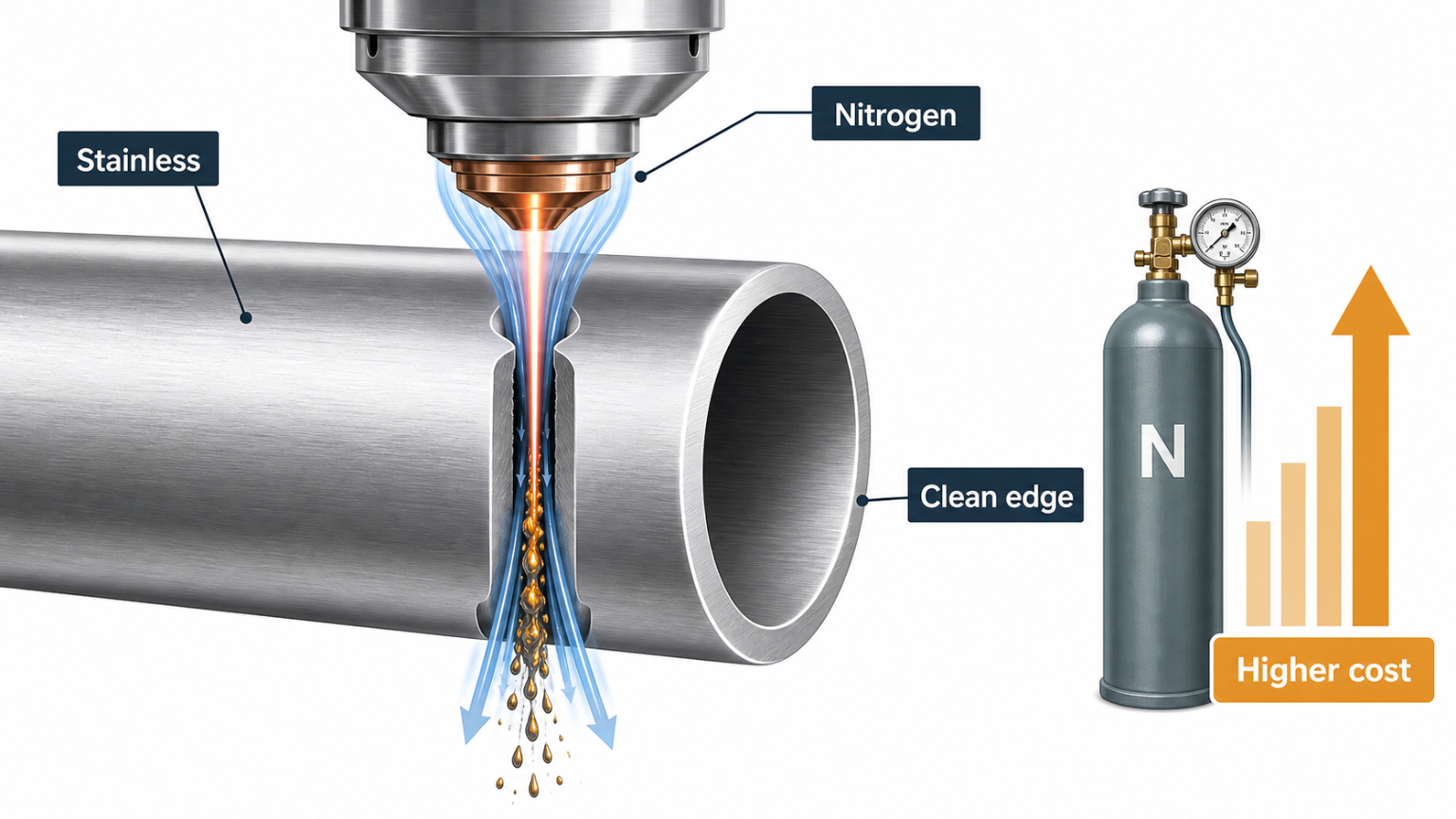
This matters in furniture, sanitary ware, and visible metal products. If a stainless tube part sits where a customer can see it, the edge quality becomes part of the product. If the tube will go inside a painted frame, the same edge requirement may waste money.
For stainless tube, buyers often specify ASTM A554 when they need welded stainless steel mechanical tubing in round, square, rectangular, or special shapes, especially where appearance, mechanical properties, or corrosion resistance matter. ASTM A269/A269M covers seamless and welded austenitic stainless steel tubing for general corrosion-resisting and low- or high-temperature service. Other common references include EN 10296-2, EN 10297-2, GB/T 12770, GB/T 14975, JIS G 3446, and JIS G 3459.
The main cost risk is nitrogen consumption. Thicker walls can also slow the cut, and poor gas purity or shielding can cause heat tint or edge oxidation. These problems do not mean stainless is a poor choice. They mean the buyer should define the required edge condition before comparing quotes.
When we discuss an RFQ at BNL Laser, I ask the buyer a simple question: “Will this edge be welded, painted, polished, or visible?” That answer often changes the correct material.
Which material is hardest to cut consistently?
Aluminum tube can be the hardest to cut consistently because aluminum alloys can have high reflectivity and high thermal conductivity. Suitable fiber laser systems can cut aluminum well, but the process window can be more sensitive than carbon steel. Alloy, temper, wall thickness, surface condition, assist gas, optics protection, and tube geometry all affect the result.
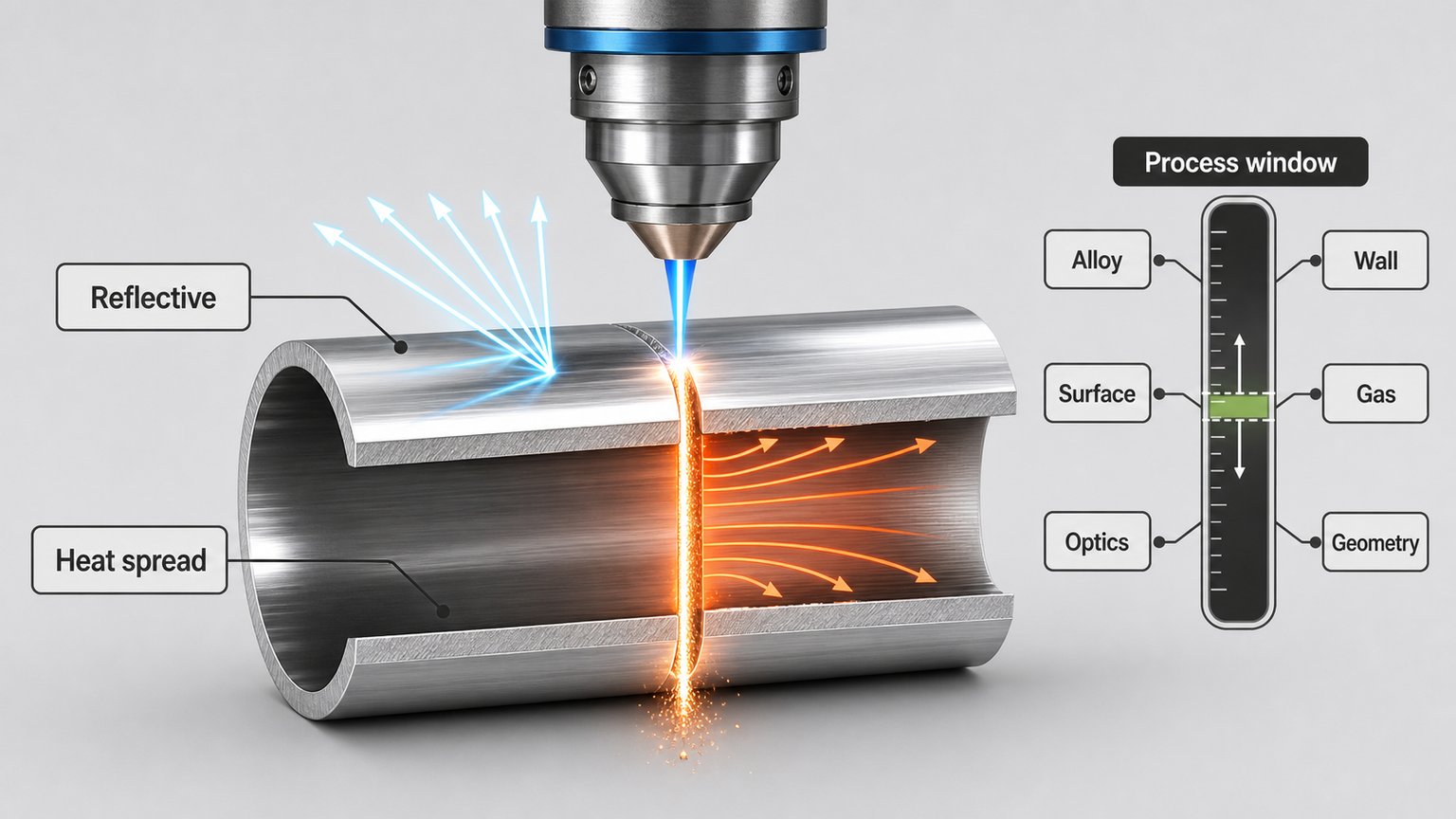
We see it on the test floor: aluminum reflects more laser energy back toward the cutting head and pulls heat away from the kerf faster than steel does. That can raise power demand on thicker walls and make burr or dross control more important.
Buyers may specify ASTM B221 for aluminum and aluminum-alloy extruded bars, rods, wire, profiles, and tubes. ASTM notes these pipe and tube products serve general-purpose applications and not necessarily pressure service. European buyers may reference EN 755-2 for aluminum extruded tube and profiles, with EN 573-3 for wrought aluminum chemical composition. China references include GB/T 6892 and GB/T 4437.1. Japan buyers may specify JIS H 4080.
Aluminum wins when weight matters. It can make sense in transport-related parts, some furniture products, and structures where handling weight affects assembly. But I would not choose aluminum only because someone heard it cuts fast. I would ask for a cut sample or process recommendation for the exact alloy, wall thickness, and surface condition.
Which material gives the lowest total cost per part?
The lowest total cost per part comes from the material that meets the drawing with the least combined cost for cutting, gas, scrap, finishing, operator time, and rework. Raw material price alone can mislead procurement. Laser cutting heat input depends on material type, thickness, process type, and cutting rate, so the buyer should compare the full process route.
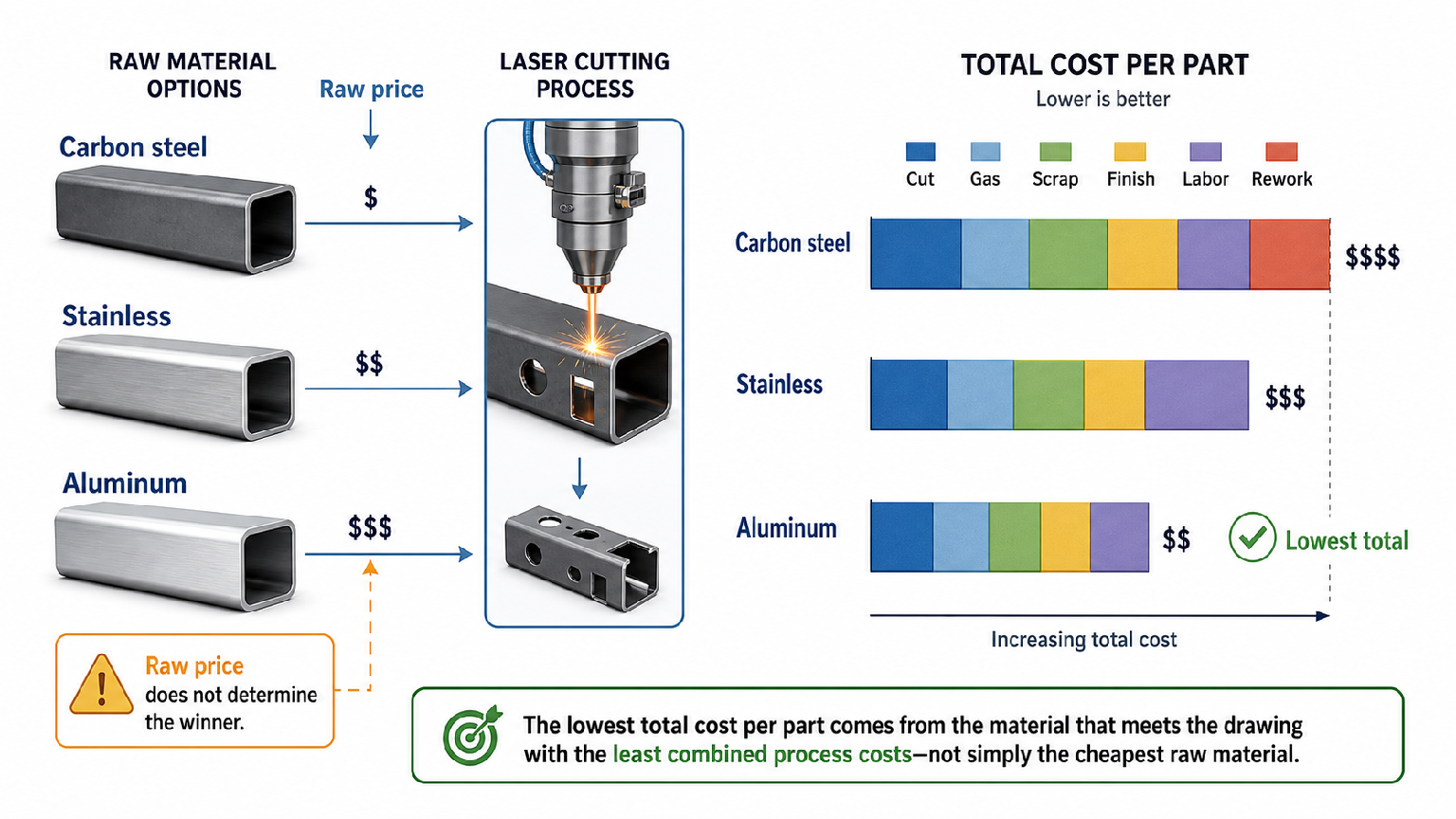
I recommend that buyers compare these cost drivers before they choose carbon steel, stainless steel, or aluminum:
- Cycle time: Ask how wall thickness and pierce count affect cutting time.
- Assist gas: Compare oxygen for carbon steel against nitrogen or inert gas for stainless and aluminum.
- Edge condition: Decide whether oxide, heat tint, burr, or dross creates extra work.
- Nesting and scrap: Check how the tube length, part geometry, and order mix affect material waste.
- Operator time: Include loading, unloading, sorting, and inspection.
- Machine uptime: A lower cut cost means little if the process stops often.
- Finishing: Add deburring, oxide removal, polishing, painting, powder coating, or corrosion protection.
This is where our work as a machine builder matters. We design, build, and service our laser tube cutters and automatic punching machines in-house, including the general-purpose Q-series. To match a grade to the right machine, send your tube data for a real configuration. We built the company in 2010, and we focus on making complex technology simple to run. The goal is practical: raise your productivity and precision while cutting your labor cost.
I do not give a payback number without the buyer’s real part mix. The right RFQ should include tube material, standard, wall thickness, drawing tolerance, edge requirement, order quantity, and finishing steps. Then the supplier can estimate a real cost per part instead of giving a vague machine promise.
Which standards should buyers put in the RFQ?
Buyers should put the tube material standard, the drawing tolerance reference, and the required edge condition in the RFQ before they compare laser cutting quotes. ISO 9013:2017 is the relevant quality and tolerance reference for thermal cuts, including laser cuts, and it covers laser cuts from 0.5 mm to 32 mm. Do not assign an ISO 9013 tolerance class unless the drawing or RFQ states it.
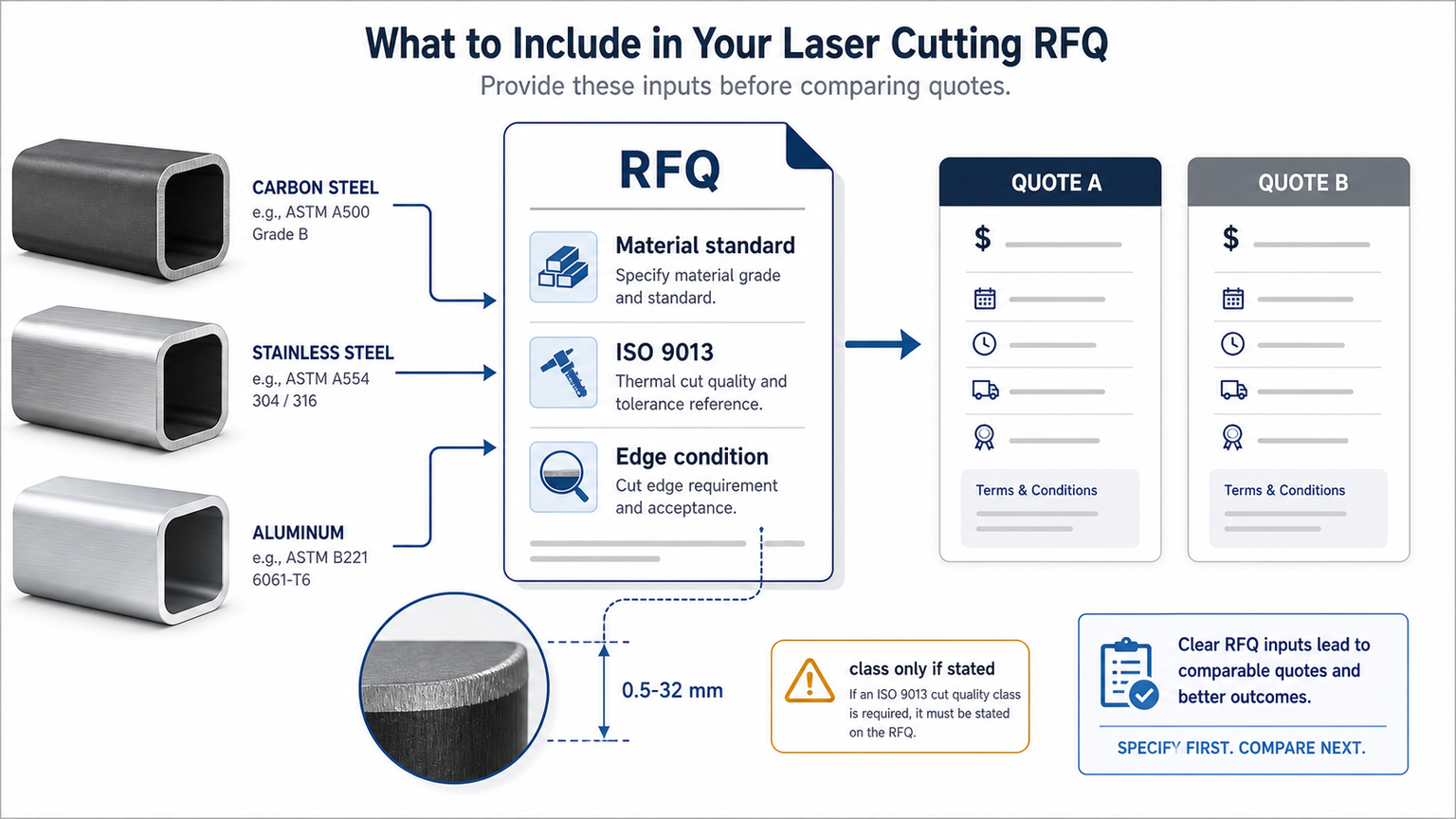
For material standards, use the standard that matches your region, supply chain, and part function:
- Carbon steel structural tube: ASTM A500/A500M, EN 10219, EN 10210, GB/T 6728, JIS G 3444, or JIS G 3466.
- Stainless mechanical or corrosion-resistant tube: ASTM A554, ASTM A269/A269M, EN 10296-2, EN 10297-2, GB/T 12770, GB/T 14975, JIS G 3446, or JIS G 3459.
- Aluminum extruded tube or profiles: ASTM B221, EN 755-2, GB/T 6892, GB/T 4437.1, or JIS H 4080.
I also tell buyers to confirm the current active revision during RFQ, especially for EN, GB/T, and JIS standards. The standard code helps the supplier understand the material family, but the revision and local adoption can vary.
A strong RFQ does not need many words. It needs the right words. State the tube standard, alloy or grade if known, wall thickness, tube shape, cut features, tolerance standard, edge condition, annual quantity, and finishing process.
How should you choose between carbon steel, stainless steel, and aluminum tube?
Choose carbon steel for low cutting cost, stainless steel for corrosion-resistant and clean visible edges, and aluminum for weight-sensitive parts where your supplier can prove the process on the exact tube. Each option wins in a different situation. The wrong choice usually happens when the buyer compares material price but ignores assist gas, edge cleanup, finishing, and scrap.
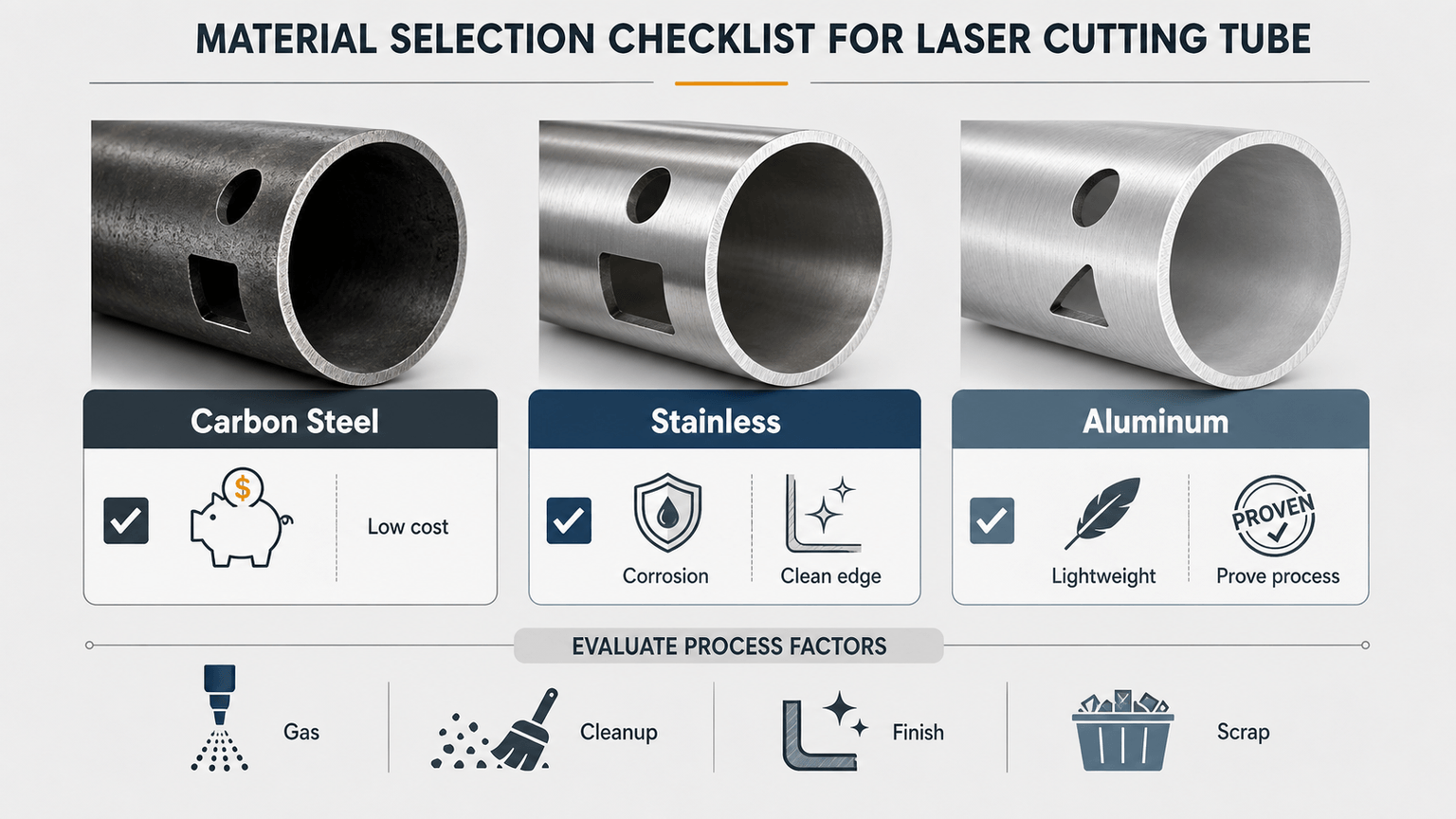
Choose carbon steel tube if:
- You need a cost-sensitive structural tube or frame.
- Your drawing allows oxygen-cut edges.
- Paint, powder coating, or corrosion protection already sits in your process.
- You can manage oxide edge, dross, and downstream prep.
- You specify standards such as ASTM A500/A500M, EN 10219, EN 10210, GB/T 6728, JIS G 3444, or JIS G 3466.
Choose stainless steel tube if:
- You need corrosion resistance or a visible clean edge.
- Your part goes into sanitary ware, furniture, or a product where appearance matters.
- You accept higher gas cost for nitrogen or inert-gas fusion cutting.
- You want to reduce the need for coating in the right environment.
- You specify standards such as ASTM A554, ASTM A269/A269M, EN 10296-2, EN 10297-2, GB/T 12770, GB/T 14975, JIS G 3446, or JIS G 3459.
Choose aluminum tube if:
- You need lower weight in the final product.
- You can control alloy, temper, wall thickness, and surface condition.
- You can validate burr, dross, and edge quality before production.
- Your supplier understands reflection and heat-conduction risks.
- You specify standards such as ASTM B221, EN 755-2, GB/T 6892, GB/T 4437.1, or JIS H 4080.
Before I make promises about speed, gas use, or payback on one of our machines, I ask for the real part drawing and a tube sample. I do not quote those numbers off a chart — we cut your actual tube, send the sample back, and confirm the figures in writing during the RFQ. A serious buyer deserves a serious answer from the actual part.
Conclusion
Carbon steel tube is usually easiest and cheapest to laser cut when oxygen cutting and an oxidized edge are acceptable. Stainless steel usually costs more to cut cleanly because it often needs nitrogen or inert gas, but it can win when corrosion resistance and appearance matter. Aluminum can cut well on suitable fiber laser systems, but it needs closer control because reflectivity, thermal conductivity, alloy, temper, and wall thickness affect consistency.
If you want a practical answer for your part, send the drawing, tube standard, wall thickness, edge requirement, and annual quantity, and we will help you evaluate the material and machine fit. The consult costs nothing and commits you to nothing, and we reply within one business day.
EL
— Eric Liu, General Manager, BNL Laser